The Integrated Energy Value Chain:
Architecting Connectivity from Wellhead to Refinery
The industrial chain of petroleum, petrochemical, and mineral industries is a massive, three-tiered ecosystem: upstream exploration and exploitation, midstream storage and transportation, and downstream processing and refining. Across this continuum, operations are defined by their geographic fragmentation, spanning remote onshore well sites, offshore drilling platforms, and expansive pipeline networks. Each of these "spatial sites" represents a complex intersection of diverse service requirements, where mission-critical production networks, high-bandwidth video surveillance, and essential office traffic must coexist.
Achieving total operational awareness in these environments requires more than just connectivity; it requires the seamless integration of multiple terminals, legacy devices, and disparate systems across cascaded network sites. Henrich provides the stable, safe, and reliable communication infrastructure necessary to bridge these gaps. By architecting a unified network that thrives in harsh environments, we ensure that the "Pulse of Energy" remains constant from the furthest remote asset to the central control room.
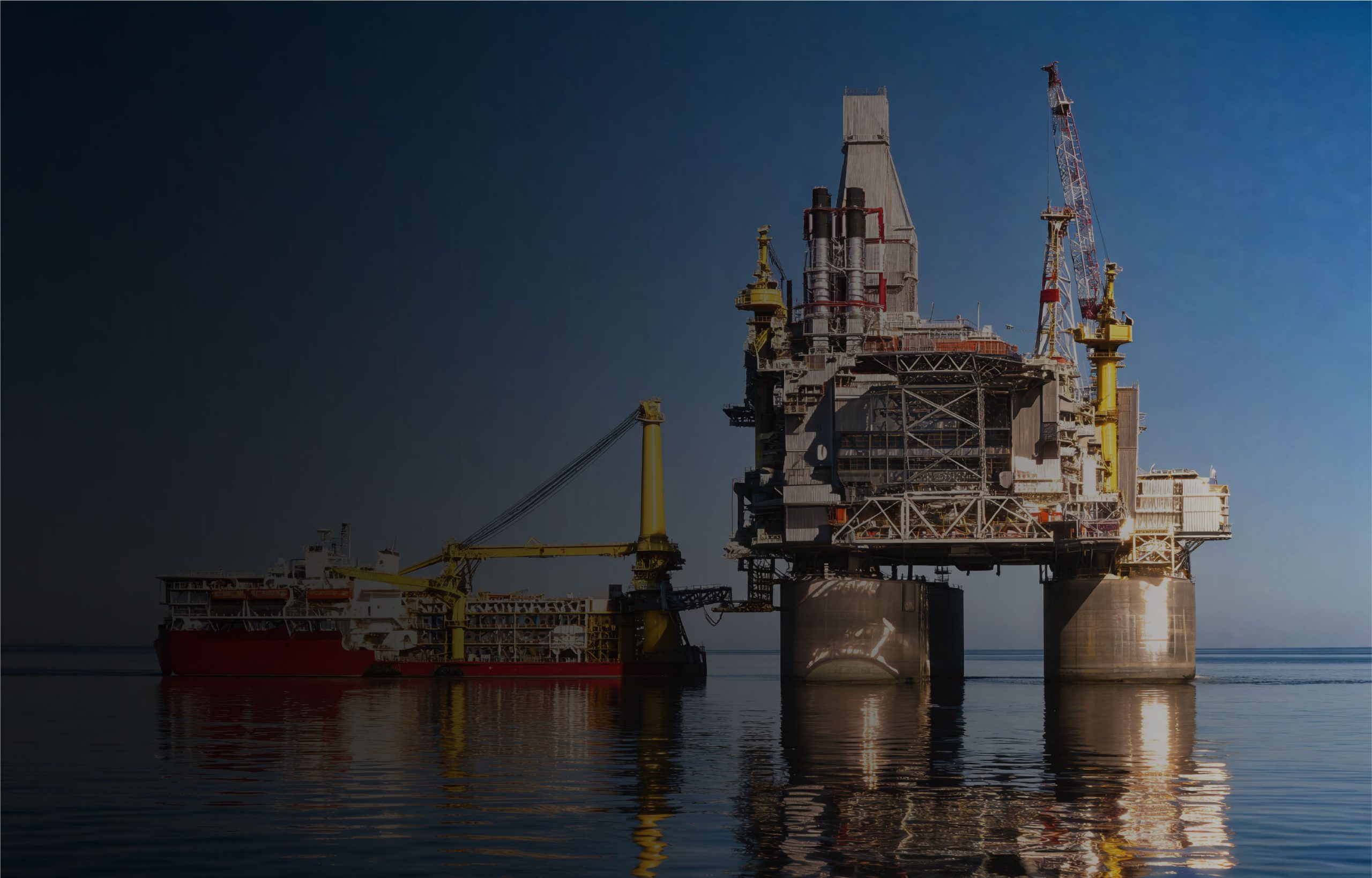
In the petroleum and mining sectors, connectivity isn't a luxury—it’s a life-support system. However, these environments are "communication black holes," characterized by deep shafts, explosive gases, and extreme temperatures. A truly "intelligent" solution must do more than just transmit data; it must survive the terrain. We propose a three-tier architecture designed for total operational awareness.
The Three-Tier Architecture Logic
To achieve "All-Terrain" awareness, the communication system must address three distinct geographic and functional challenges. These scenarios are chosen to represent the Horizontal (connectivity), Vertical (intelligence), and External (integration) dimensions of a modern site:
■ The Foundation Layer (Scenario 1):Focuses on the "Deep Mine" backbone. This is the High-Availability layer where failure is not an option. It ensures that the basic nervous system of the site is unbreakable.
■ The Execution Layer (Scenario 2):Focuses on the "Hazardous Zone" processing. This is the Edge Intelligence It moves the decision-making power directly to the machinery, reducing reliance on distant servers.
■ The Transport Layer (Scenario 3): Focuses on "Remote Site" backhaul. This is the Ultra-Mobile layer. it uses 5G to bridge the gap between isolated field assets and the global command center.
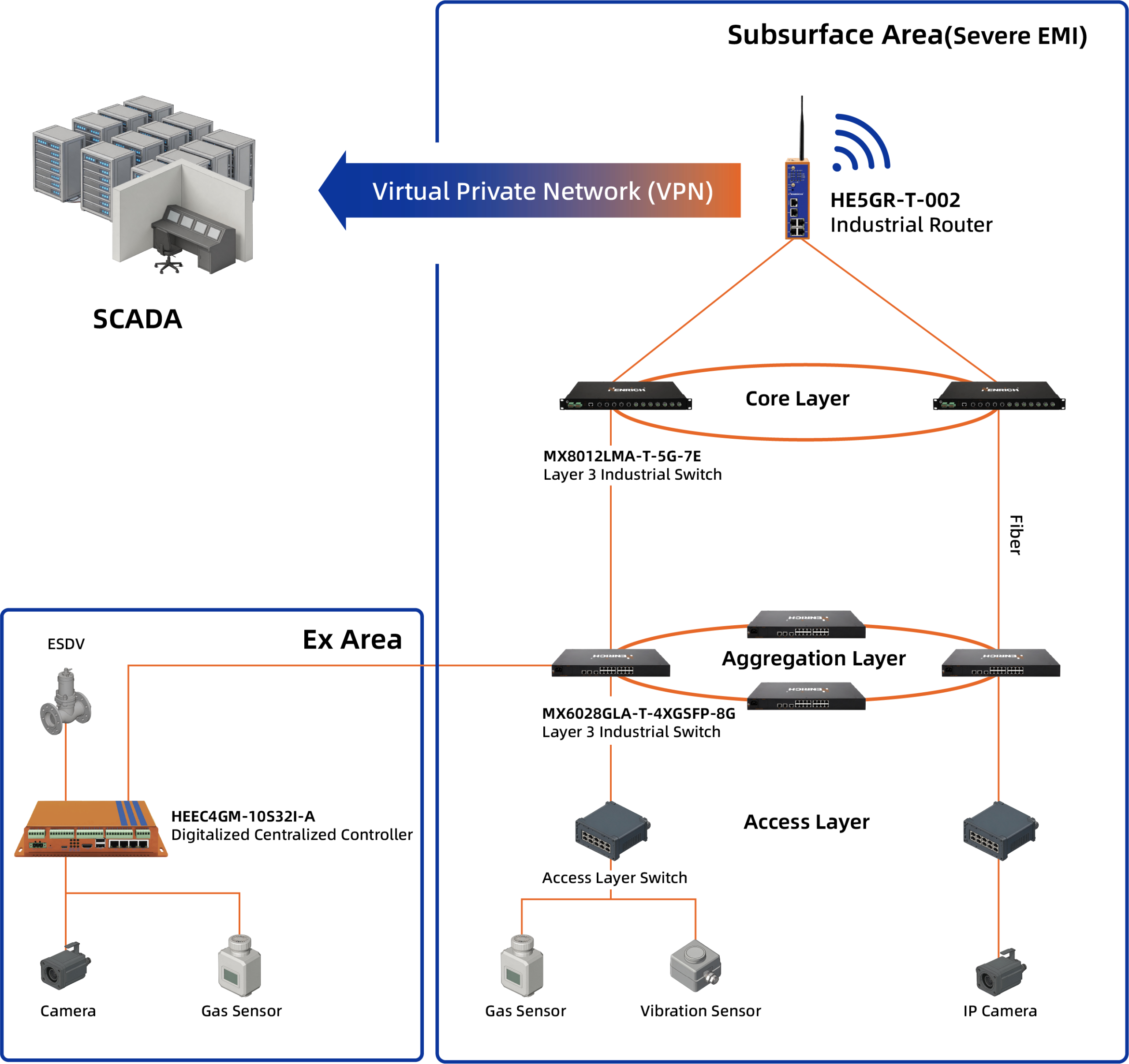
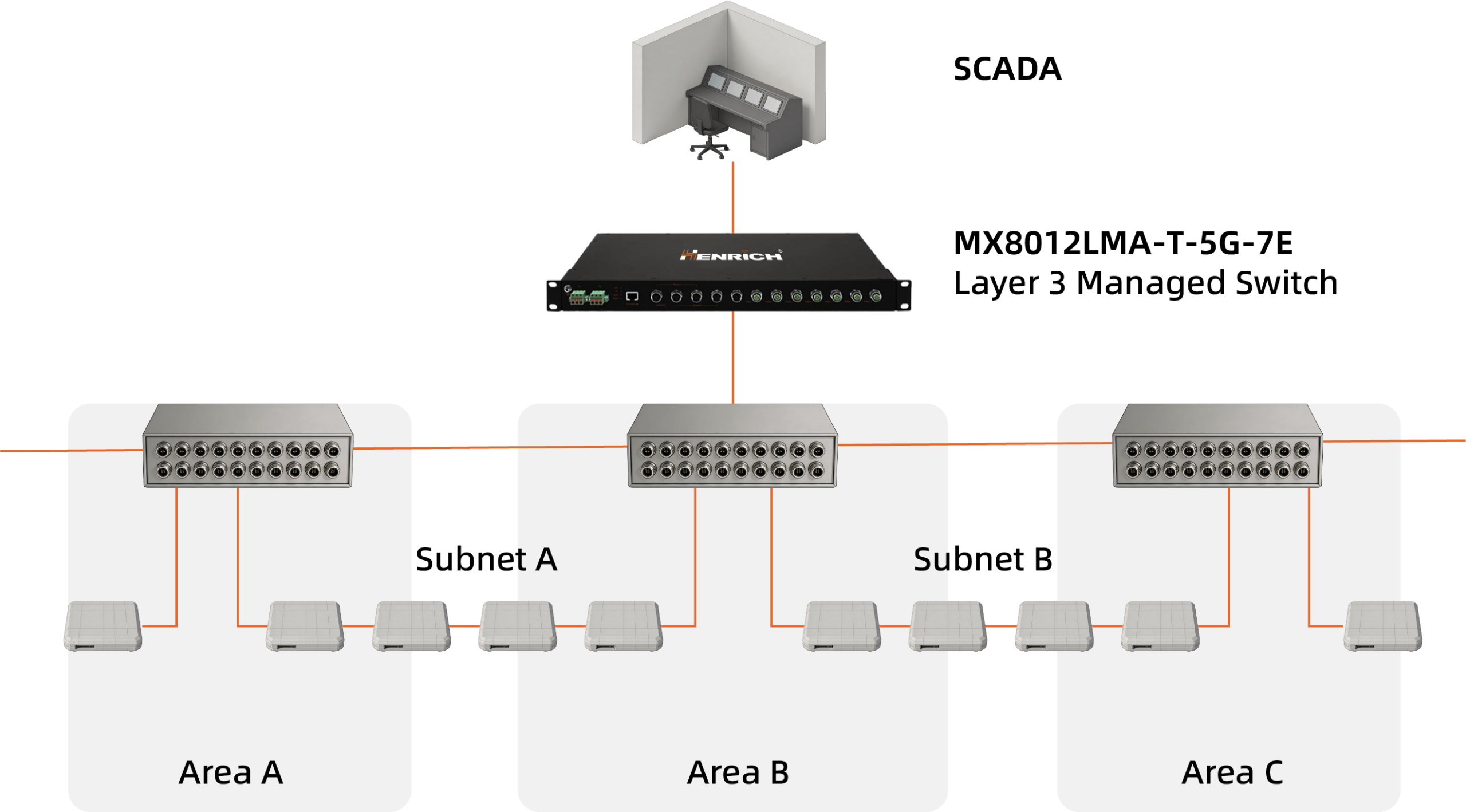
▎Scenario 1: The Resilient Underground Backbone (Reliability First)
Deep-shaft mining requires a network that can survive mechanical shocks and accidental fiber damage.
■ Solution: The MX8012 Industrial Switch forms the physical layer. By utilizing ERPS ring redundancy, the network remains operational even if a cable is severed. Its wide temperature tolerance (-40°C to +75°C) ensures stable performance in the humid, high-heat environments typical of deep excavation.
■ Logic: You cannot have AI or remote control without a rock-solid wired foundation.
Related Products >
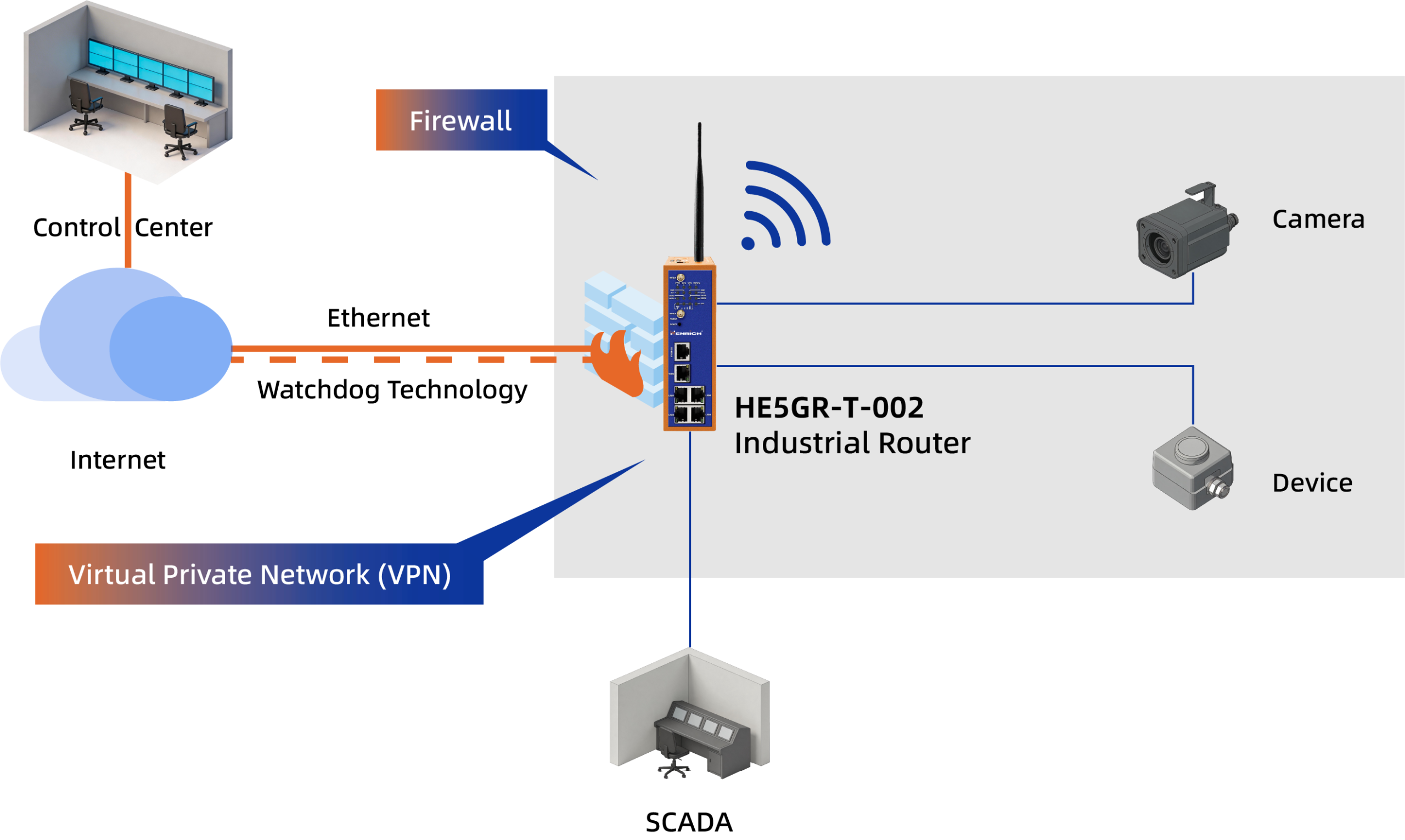
▎Scenario 3: Bridging the "Last Mile" with 5G (Remote Connectivity)
For remote oil rigs and open-pit mobile machinery, cabling is impossible.
■ Solution: The HE5GR 5G Router provides the high-bandwidth "Wireless Bridge." Supporting Global 5G Sub-6GHz bands, it enables 4K video backhaul and low-latency remote operation of heavy machinery. With robust VPN encryption, it ensures that data traveling across the open air remains secure from the rig to the headquarters.
■ Logic: The 5G layer completes the circuit, allowing local data and AI insights to reach global decision-makers.
Related Products >
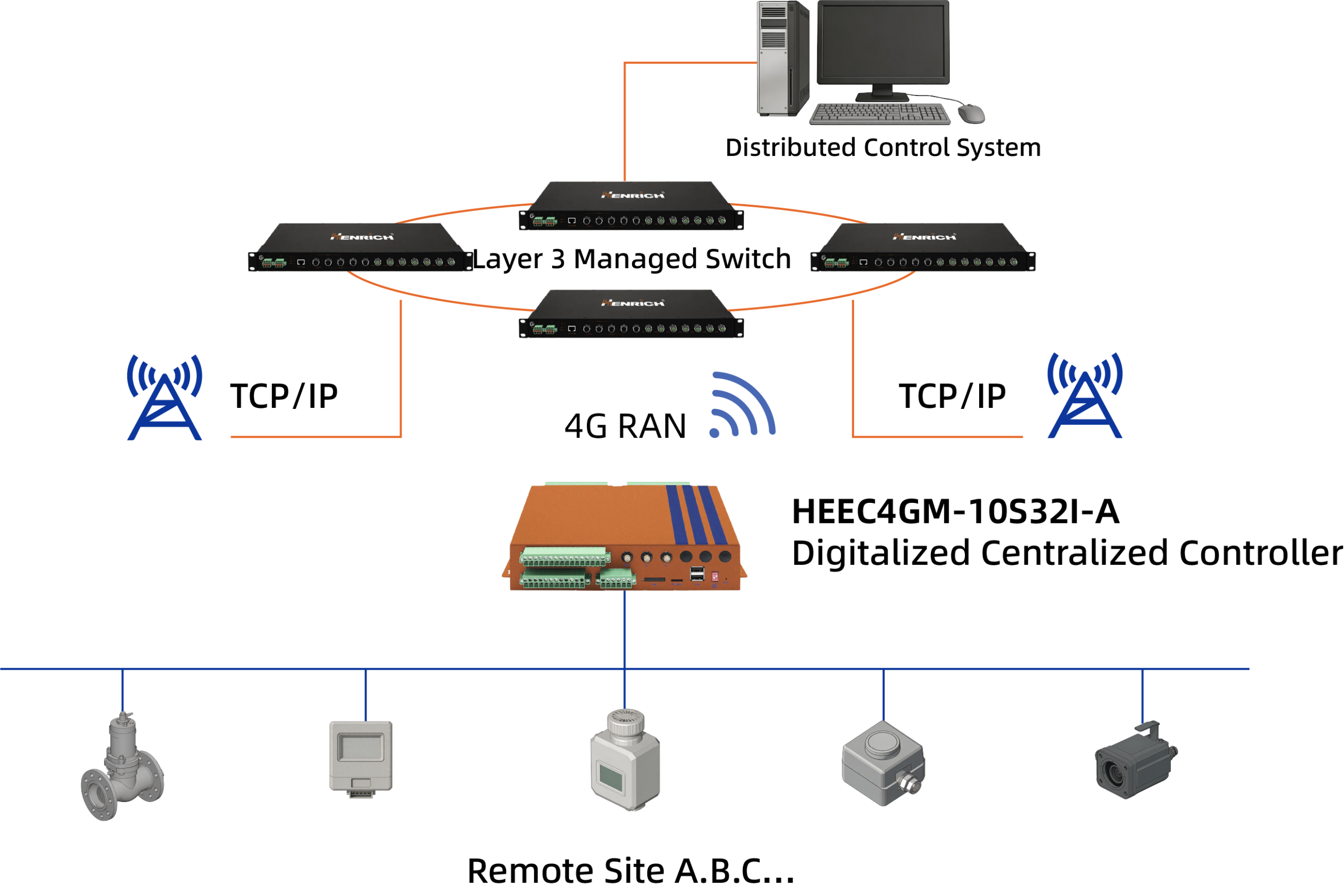
▎Scenario 2: Intelligent Safety in the "Danger Zone" (Edge Processing)
In explosion-proof zones where human presence must be minimized, the hardware must be "smart" enough to act independently.
■ Solution: The HEEC4GM Industrial AI Controller acts as the local brain. With a 1TOPS AI accelerator, it processes high-definition video feeds on-site to detect gas leaks or safety violations in real-time. By integrating CAN-bus and Serial connectivity, it bridges legacy sensors with the modern digital twin.
■ Logic: Moving intelligence to the edge reduces the risk to personnel and ensures safety decisions happen in milliseconds, not seconds.
Related Products >
The Architecture of Certainty
The "Pulse of Energy" is not found in a single device, but in the seamless flow between the MX8012 backbone, the HEEC4GM brain, and the HE5GR bridge. Together, they form an all-terrain ecosystem that turns the harshest industrial environments into data-rich, safe, and efficient operations.

Ready to Get Started?
Drop us a message, we're here to help!