From Digital to Intelligent:
The Evolution of Agriculture
What is Digital Farming?
Digital farming (or Agriculture 4.0) is the consistent use of modern information technology to record and link every activity on the farm. Before a machine can make an "intelligent" decision, the farm must first be "digitized"—meaning its soil, weather, and crop health must be converted into data points.
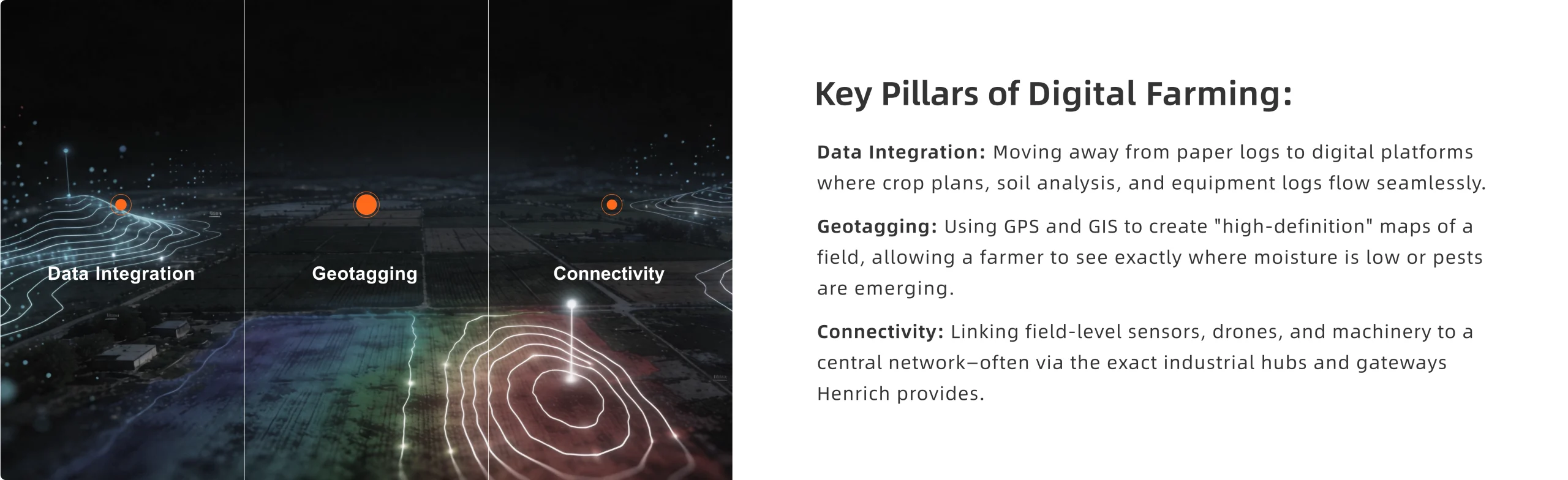
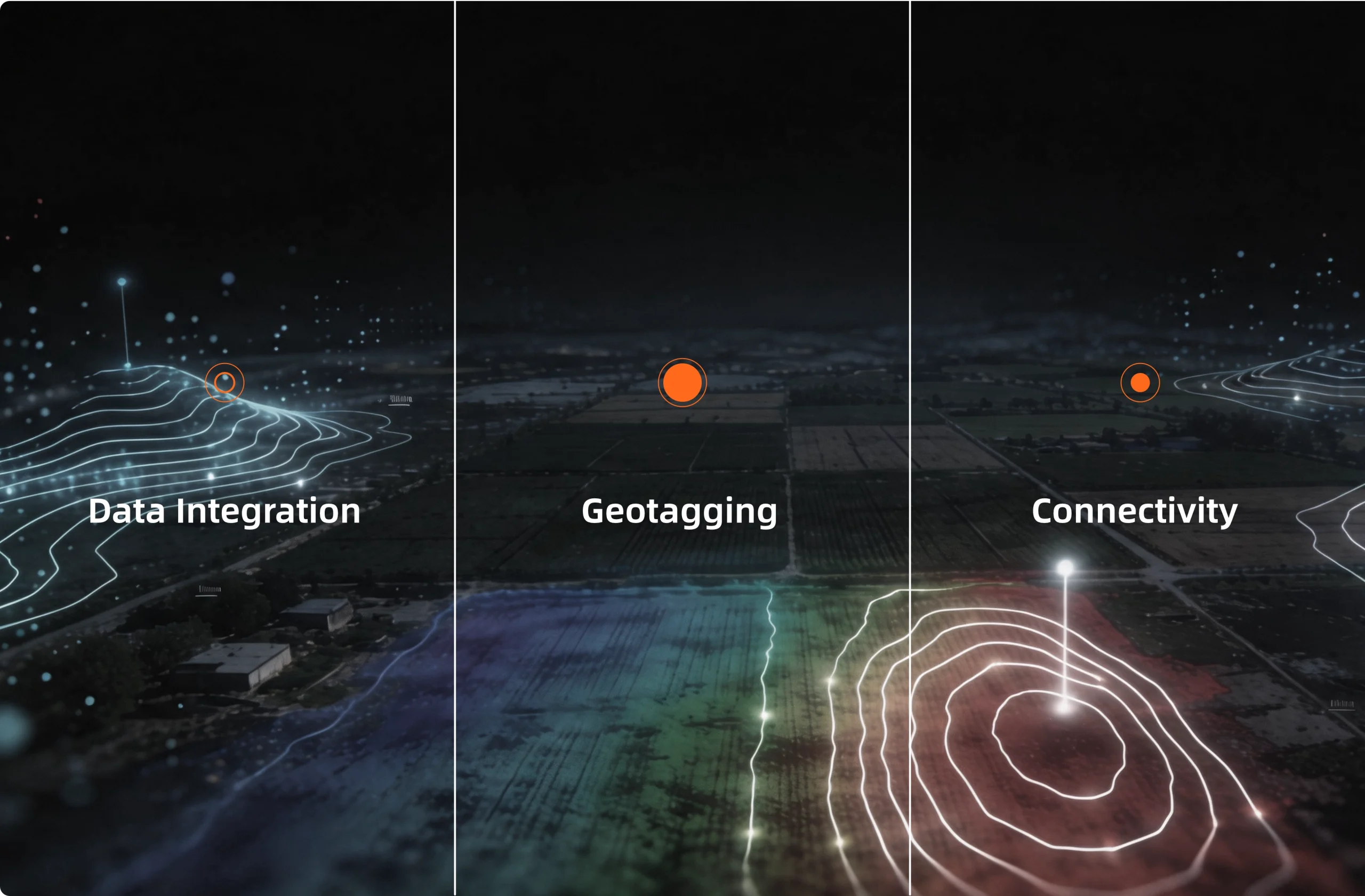
Key Pillars of Digital Farming:
Data Integration: Moving away from paper logs to digital platforms where crop plans, soil analysis, and equipment logs flow seamlessly.
Geotagging: Using GPS and GIS to create "high-definition" maps of a field, allowing a farmer to see exactly where moisture is low or pests are emerging.
Connectivity: Linking field-level sensors, drones, and machinery to a central network—often via the exact industrial hubs and gateways Henrich provides.
The Bridge to Intelligent Farming
■ Intelligent farming is what happens when you apply Artificial Intelligence (AI) and Machine Learning to that digital data.
■ Digital Farming tells you: "Section A of the field has 15% soil moisture."
■ Intelligent Farming decides: "Based on the 5-day weather forecast and current moisture, I will trigger the irrigation for Section A at 3:00 AM to minimize evaporation.
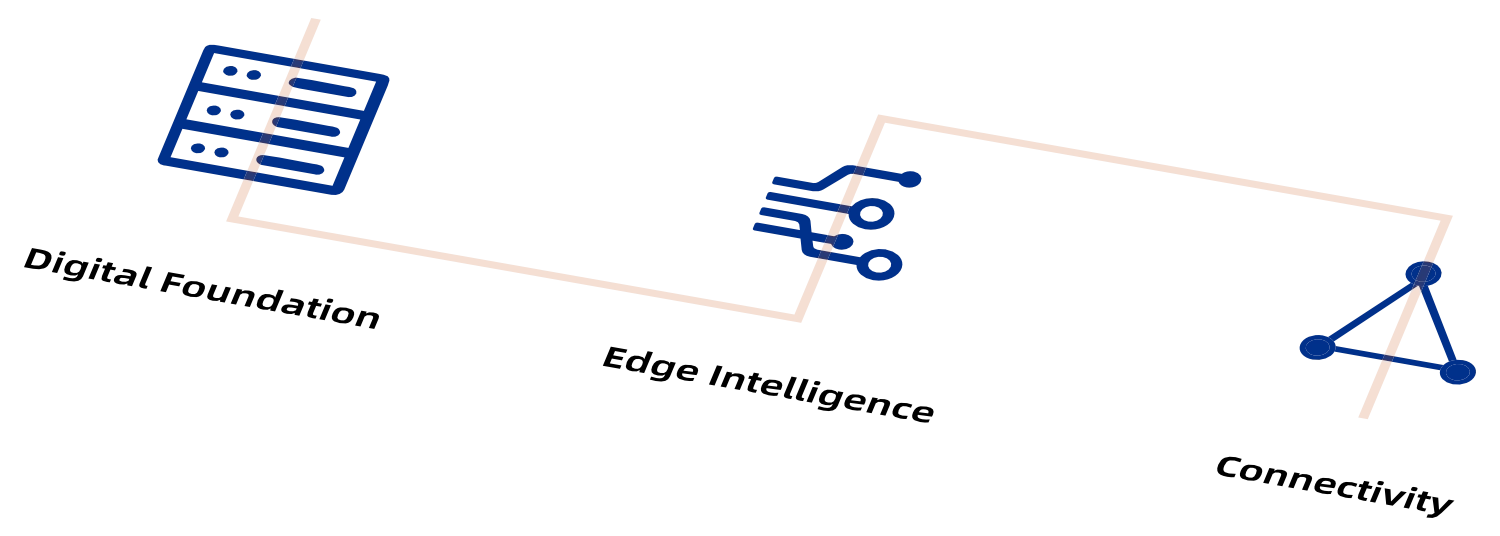
The Architectural Backbone of Agricultural Technology (Agtech)
A successful intelligent farming deployment requires a seamless tran sition of data from the soil to the cloud and back to the actuators. Henrich provides the specialized hardware for each of these critical transitions.
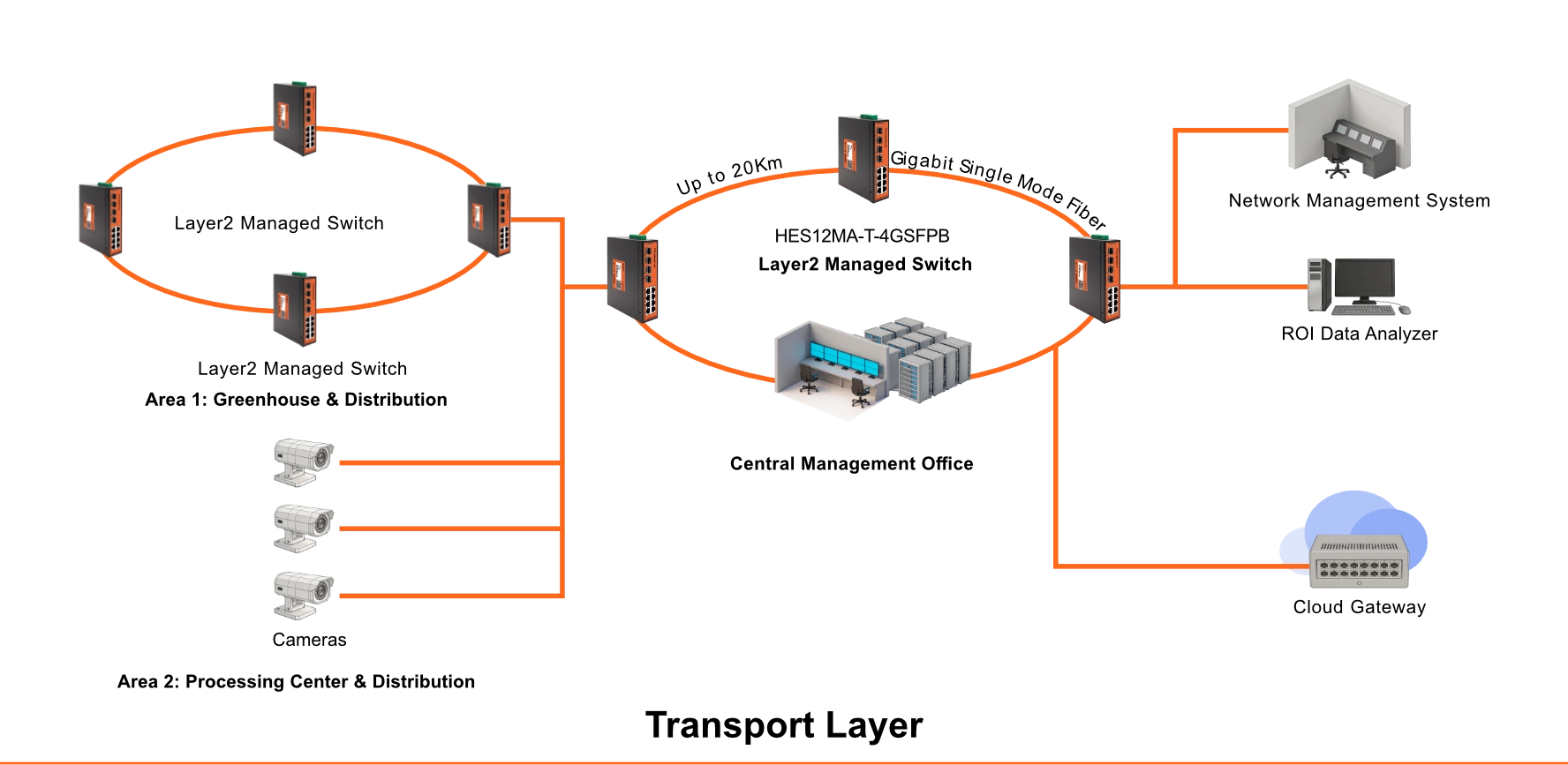
▎The Transport & Aggregation Layer: Global Connectivity
Intelligent farming often happens in "Data Deserts"—remote areas where wired internet is unavailable. Henrich ensures that field data reaches the AI models in the cloud.
The Transport Layer provides a Hybrid Backhaul strategy. For fixed infrastructure, Henrich Gigabit Fiber rings ensure zero-latency data flow across several kilometers. For mobile or remote edge assets—such as drones or autonomous machinery—Industrial 5G/4G Routers act as the high-bandwidth 'wireless highway' to bridge the gap where cabling is not feasible.
Network Redundancy: To ensure 24/7 "Simple, Reliable, Safe" operations, Henrich switches support Ring Redundancy protocols with a recovery time of less than 15ms, ensuring that a single broken cable doesn't bring down the entire irrigation system.
Related Products >
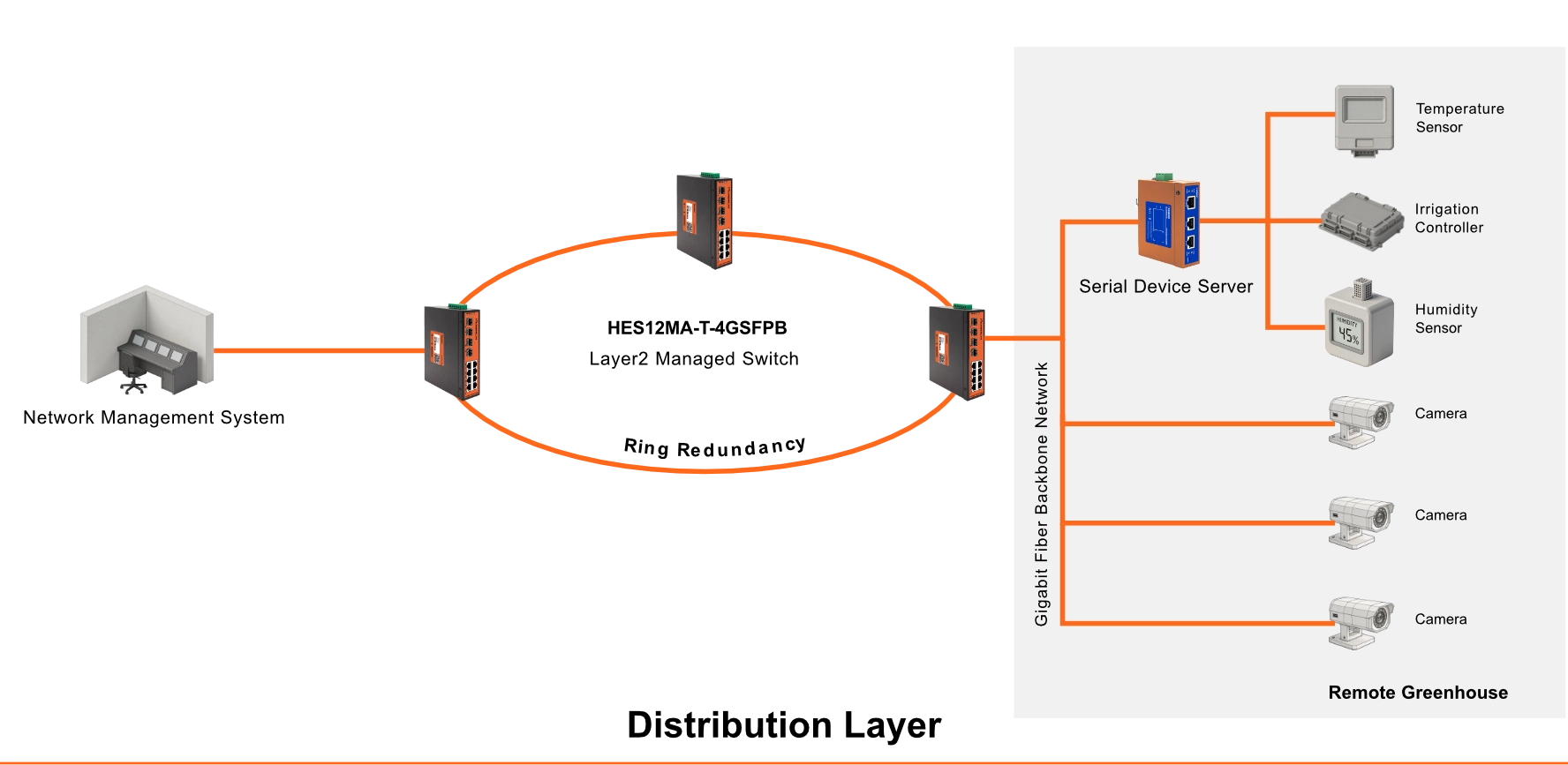
▎The Distribution Layer: Ruggedized Infrastructure
The farm environment is "hostile" to electronics due to dust, moisture, and extreme temperatures. Standard office-grade equipment will fail, leading to costly data gaps.
Environmental Resilience: Henrich hardware is designed for a wide operating temperature range (typically -40℃ to +75℃), ensuring stability during both mid-summer heatwaves and winter freezes.
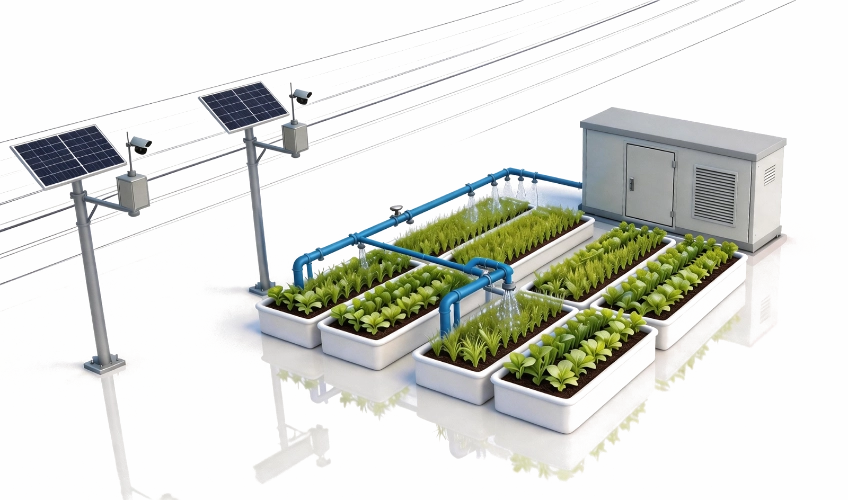
PoE for Surveillance & Sensing: Managed PoE/PoE++ Switches provide both data and up to 90W of power to high-definition AI cameras used for livestock monitoring or pest detection, eliminating the need for separate power lines in the field.
Related Products >
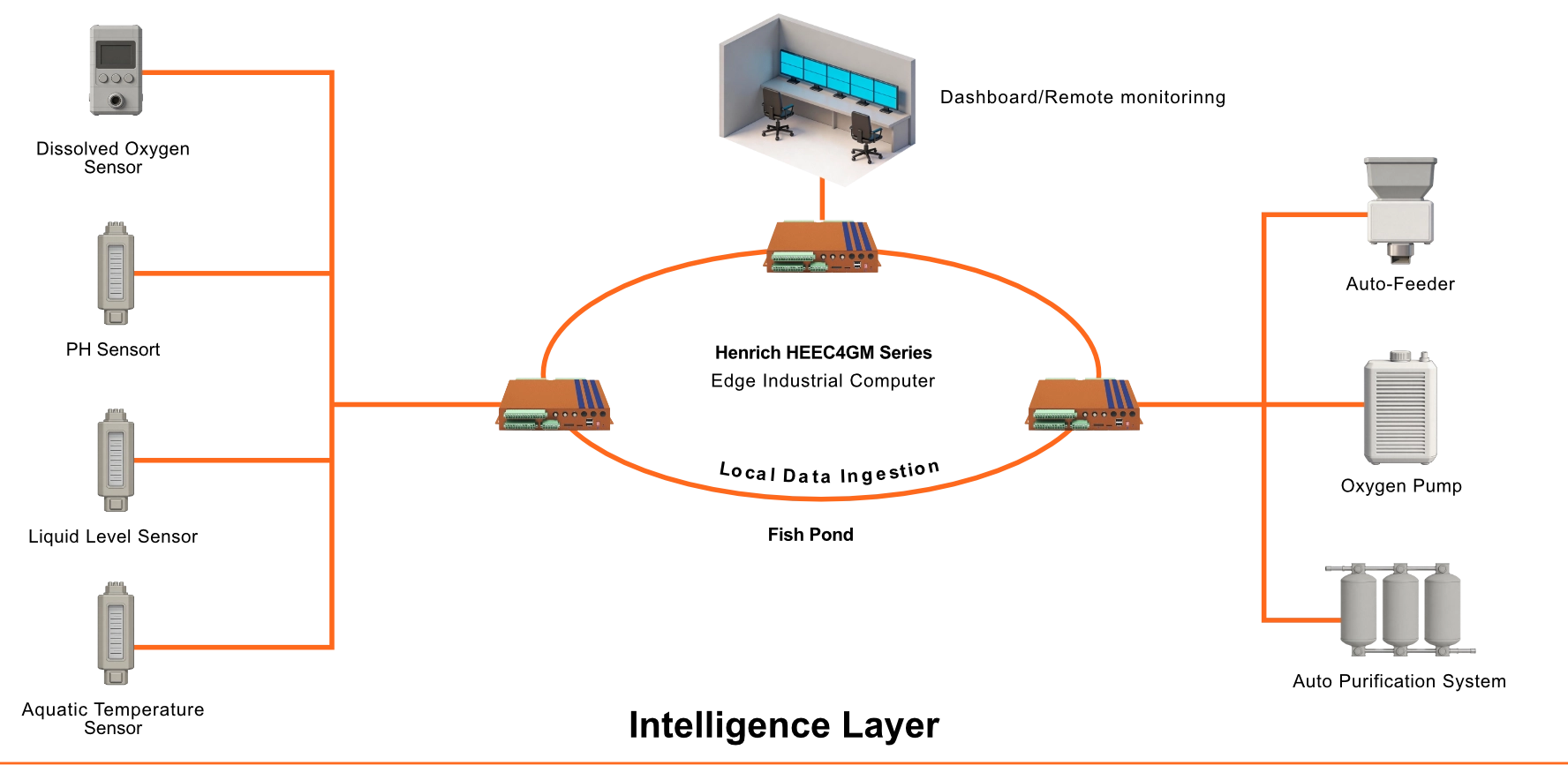
▎The Intelligence Layer: Edge Computing & Control
To reduce cellular data costs and latency, intelligent farming is moving toward Edge AI, where processing happens on the farm.Linux-Based Processing: Henrich Edge Computers and Digital Controllers come with Linux OS customization capabilities, allowing developers to host local AI models that can trigger "By-pass" ports or alarm outputs instantly based on sensor input.
Related Products >
▎The Field Access Layer: Data Acquisition & Digitization
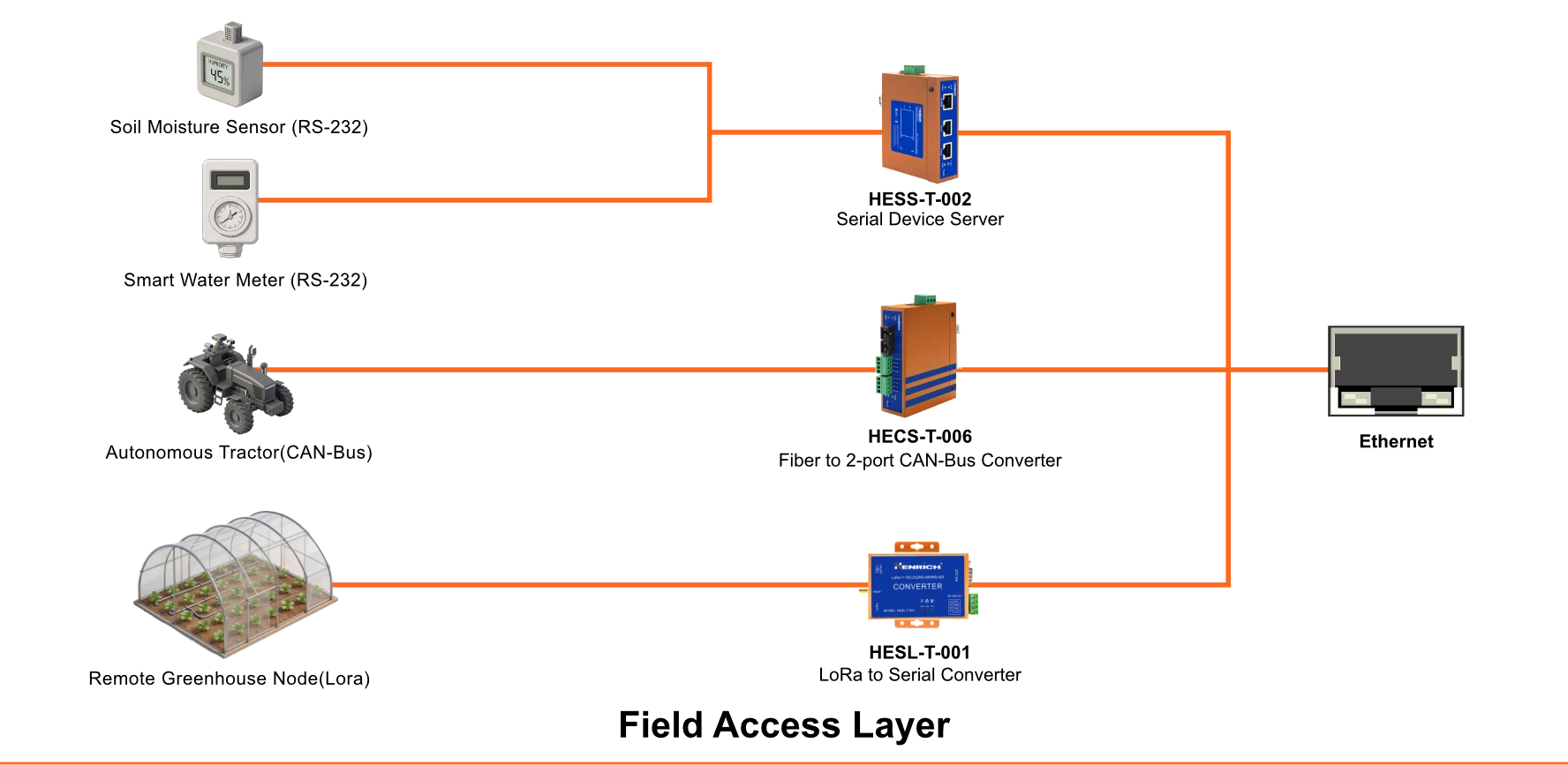
At the ground level, sensors use various legacy protocols (RS-232, RS-485, CAN BUS) that are incompatible with modern Ethernet networks. Henrich bridges this gap by converting raw physical signals into digital data packets.
Legacy Integration: Serial to Ethernet Servers (1-32 ports) allow multiple soil moisture, pH, and nutrient sensors to join the network simultaneously.
Related Products >
Why It Matters: The ROI of Data
In conclusion, the transition from digital monitoring to Intelligent Farming is built upon a foundation of rugged, high-precision connectivity.
By deploying the Henrich architectural stack—ranging from resilient field-level gateways to the high-performance HEEC4GM-6S24I-A Edge AI 'Brain'—farmers can move beyond simple data collection. This integrated ecosystem empowers the autonomous management of resources, drastically reducing operational waste while maximizing crop yields. Ultimately, this 'Hardened' infrastructure provides the 24/7 reliability required to turn raw field data into a measurable, sustainable
Return on Investment.
Traceability
Digital records provide a "farm-to-fork" history, making it easier to comply with safety regulations and prove sustainability.
Yield Boosts
Real-time monitoring and data-backed decisions can increase crop yields by 20–30%.
Ready to Get Started?
Drop us a message, we're here to help!
Resource Saving
Precision application of water and nutrients can reduce waste by 40–60%.
Ready to Get Started?
Drop us a message, we're here to help!